


Change Communication in Manufacturing: How to Reach Frontline Employees
Communicating reorganization or restructuring to manufacturing employees is one of the most difficult challenges for change managers and HR teams. In distributed teams, where many employees do not use computers, it is easy for chaos, misinformation, and lower morale to appear. This article shows how to approach change communication in a way that minimizes resistance and maintains engagement, with practical examples.
What communication channels work best for frontline employees?
Mobile apps, notice boards on the production floor, and direct team meetings work best. Most manufacturing employees do not regularly use email or a traditional intranet, which is why mobile tools and communication delivered where people actually work are essential.
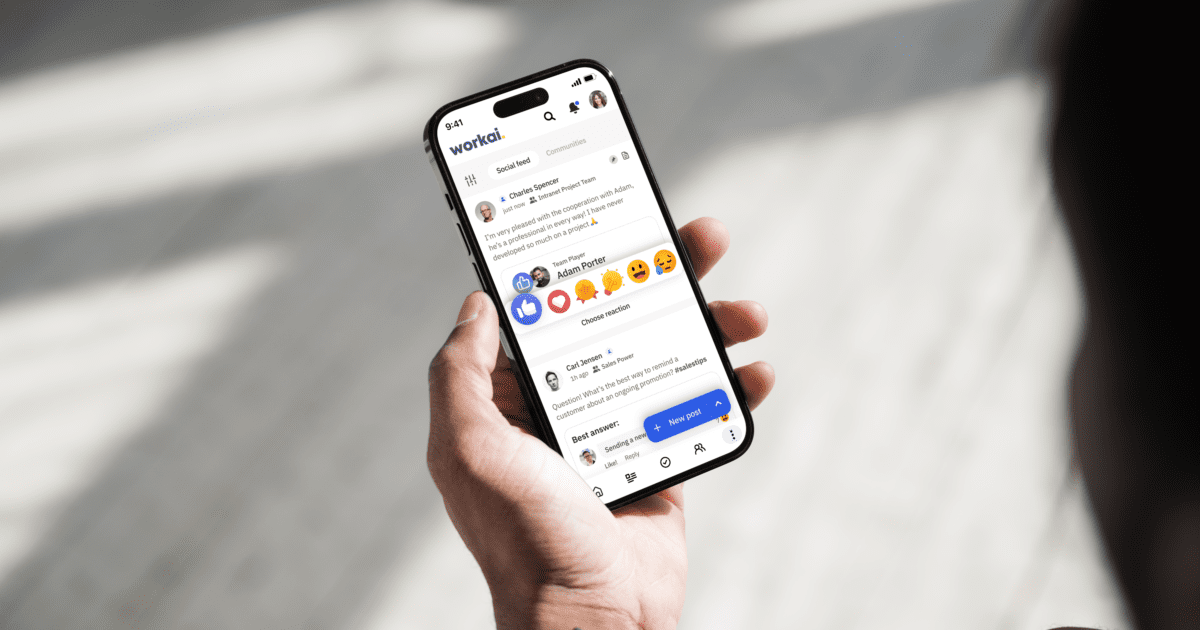
Regular engagement with email communication ranges from 26% to 75%, which shows a large variation depending on the industry and the communication channels used. In manufacturing, where access to computers is limited, the effectiveness of traditional channels such as email or a desktop intranet drops significantly. That is why more and more companies are implementing mobile apps that enable quick push notifications, access to the most important announcements, and FAQ sections directly on employees’ phones.
Example: Żabka Polska implemented a dedicated mobile app for internal communication. Thanks to message personalization and targeting by region or store format, change-related communication reaches exactly the people who need it. In addition, integration with Microsoft Teams enables smooth communication with the office and management teams.
In addition to mobile apps, physical notice boards on production floors and short, regular team meetings are also essential — ideally led by direct supervisors. These meetings create space for asking questions and addressing concerns in real time. You can read more about building a central communication platform in manufacturing in the article: A Practical Guide to Building an Internal Communication Platform for Manufacturing.
How can you prepare leaders to communicate difficult information?
Communication training and HR support are essential to help leaders communicate change clearly, empathetically, and consistently. Frontline leaders are the most important link in the process — they are the ones who either build trust or lose it.
According to Gallup’s 2026 report, manager engagement has fallen from 31% to 22% over three years, costing the global economy more than $10 trillion annually. This shows how critical it is to support this group during change processes. Leaders who do not feel confident in their role as communicators may unintentionally deepen uncertainty in their teams.
Practical actions include:
- Change communication workshops led by HR or external experts
- Ready-made conversation scripts, answers to frequently asked questions, and checklists
- The option to consult HR immediately in difficult situations
- Regular meetings with leaders to share feedback and support one another
It is also worth implementing tools that allow leaders to monitor the reach and reception of messages — for example, analytics features in mobile Employee Experience platforms.
Example: in the Workai platform, leaders can see who has read a message and which questions appear most often, allowing them to respond more effectively to team sentiment.
How can you minimize resistance and uncertainty among employees?
Transparency, regular communication, and the ability to ask questions build trust and reduce resistance to change. Manufacturing employees expect clear information, but above all, they need to feel that their voice matters.
Only 49% of employees believe that change is communicated well, while trust in leaders has fallen by 9 points over the past year (IOIC, 2026). What is more, only 17% of employees feel fully aligned with organizational goals, and a lack of communication clarity has nearly doubled the number of delayed projects compared with 2025.
How can you prevent this?
- Communicate updates regularly, even if not all details are known yet. It is better to say “we are working on a solution” than to stay silent.
Organize Q&A sessions and collect questions anonymously — for example, through a mobile app or question boxes on the production floor.
Involve employees in consultations: ask what concerns them and what ideas they have for implementing the change.
Use simple language, avoid jargon, and do not leave room for guessing.
Measure communication results — for example, by tracking how many people opened a message, which questions keep coming back, and whether team morale is improving. You can read more about practical ways to measure engagement here: How to Measure Employee Engagement in Manufacturing Communication.
Example: during major organizational changes at Żabka Polska, every important piece of information was delivered to employees through several channels — the mobile app, meetings with leaders, and messages on physical notice boards. This helped minimize rumors and uncertainty, while employees could ask questions directly through the app or during team meetings.
Practical takeaway
Change communication for manufacturing employees requires a combination of modern tools such as mobile apps, strong leader support, and authentic transparency. The more proactive, consistent, and two-way your communication is, the greater the chance that employees will understand and accept changes — even during difficult periods. What ways of communicating change have worked best in your manufacturing teams?
Frequently asked questions
-
What are the most common mistakes in change communication for manufacturing employees?The most common mistakes include communicating too late or providing incomplete information, relying only on email, not giving employees the opportunity to ask questions, and avoiding difficult topics.
-
Do mobile apps really increase the effectiveness of change communication?Yes. Mobile apps make it possible to deliver information quickly and in a personalized way to employees without regular access to computers, which significantly increases message reach.
-
How often should employees be informed about the progress of change implementation?It is best to update employees regularly — even weekly or after every important stage — to avoid uncertainty and rumors.
-
What tools help measure the effectiveness of change communication?Useful tools include platforms with reach analytics, such as Workai, pulse surveys, monitoring of employee questions and feedback, and analysis of attendance at team meetings.