WORKAI® introduces AI for Work — the AI-native approach to Employee Experience
LEARN MORE
Individual employee experience In the “Unit of One” model, the fundamental unit of experience design is no longer a group, but an individual. Not as a set of demographic data, but as a dynamic profile that includes ways of working, skills, development goals, engagement level, and the context in which a person operates. This shift […]
The gap between ambition and reality Most organizations are aware that productivity is no longer just about output, but about how work is structured. Around 82% of leaders identify reclaiming employee capacity as a strategic priority. Yet only about 8% report making meaningful progress in this area. This discrepancy, often described as the Progress Gap, […]
From fragmented systems to a unified work environment In most organizations, the work environment is still based on multiple independent systems. HR, IT, finance, and sales each use their own tools, which are only partially integrated. In practice, this means that employees must connect these elements themselves. They need to know where to find information, […]
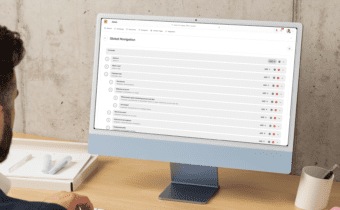
Intranet platform management has become one of the most critical dimensions of digital workplace strategy in 2026. In the Platform Management scenario of the ClearBox Intranet and Employee Experience Platforms 2026 report, the highest scores go to systems offering extensive configuration capabilities. At first glance, the conclusion seems obvious: the more administrative options a platform […]
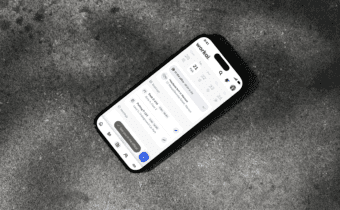
In the ClearBox Intranet and Employee Experience Platforms 2026 report, the mobile app for frontline employees is no longer treated as an add-on to the EX platform evaluation. The Mobile and Frontline Support scenario has become one of the key criteria, especially in organizations where a mobile app for frontline employees serves as the primary […]
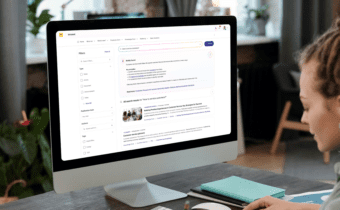
Enterprise Search for the Digital Workplace has become one of the defining capabilities of modern intranet platforms. In 2026, the success of a digital workplace is no longer defined by the number of features it offers. It is defined by one critical factor: how fast employees can complete a search for company knowledge and information. […]
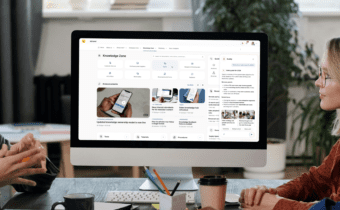
Just a few years ago, managing knowledge management in the digital workplace looked similar in most organizations. A “Documents” section was created, procedures and policies were uploaded, and within a few months, no one was entirely sure which version was current. Employees asked each other on Teams instead of searching the system, and the intranet […]


