


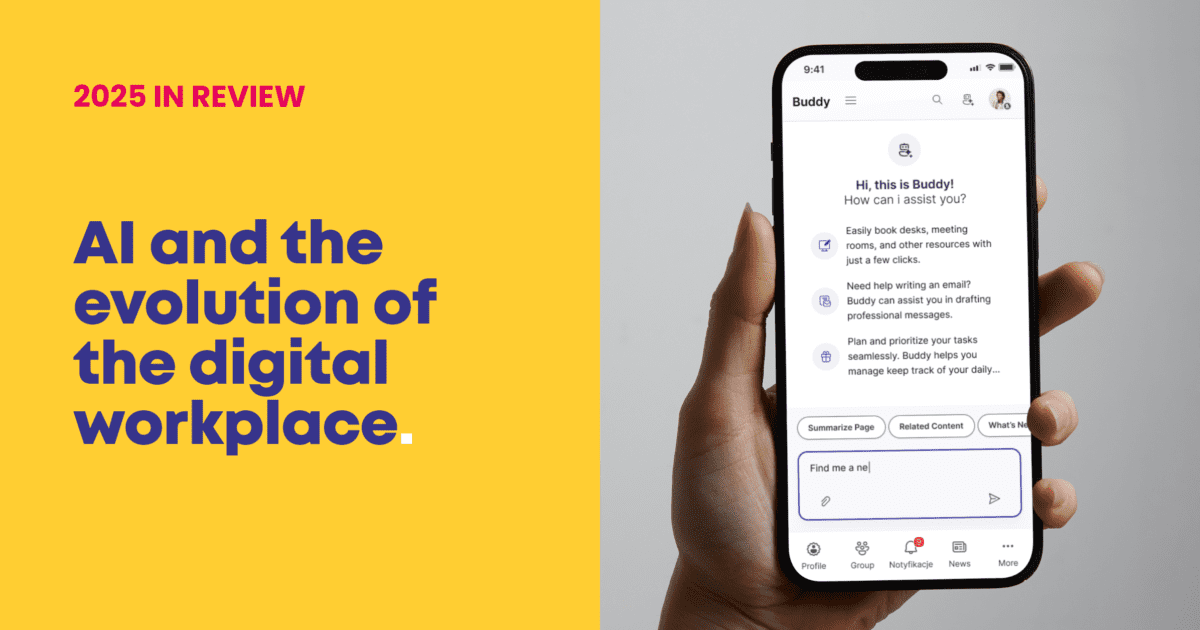
2025 in review: AI and the evolution of the digital workplace
2025 marked a turning point in the evolution of the digital workplace. AI moved beyond experimentation and isolated pilots run by selected teams. It began to shape everyday work in a tangible way, influencing how people communicate, access information, and use workplace tools as part of their daily routines.
At the same time, organisational priorities started to shift. The focus moved away from asking “How can we automate this process?” and towards a more human question: “How can we make work easier and clearer for people?”. Employee experience, reliable access to information, consistent communication, and a sense of control over the digital work environment became central to how organisations approached technology.
At Workai, 2025 was a year of intensive development guided by this mindset. We expanded our AI for Work approach and introduced new AI-powered capabilities, while also focusing on bringing clarity to the digital workplace. New modules were designed to help teams collaborate more effectively and manage content and resources in one place.
We invite you to look back at 2025 with us, and to explore our perspective on how the evolution of the digital workplace may continue to unfold in 2026.
Predictions vs. reality: the 2025 edition of the DEX report
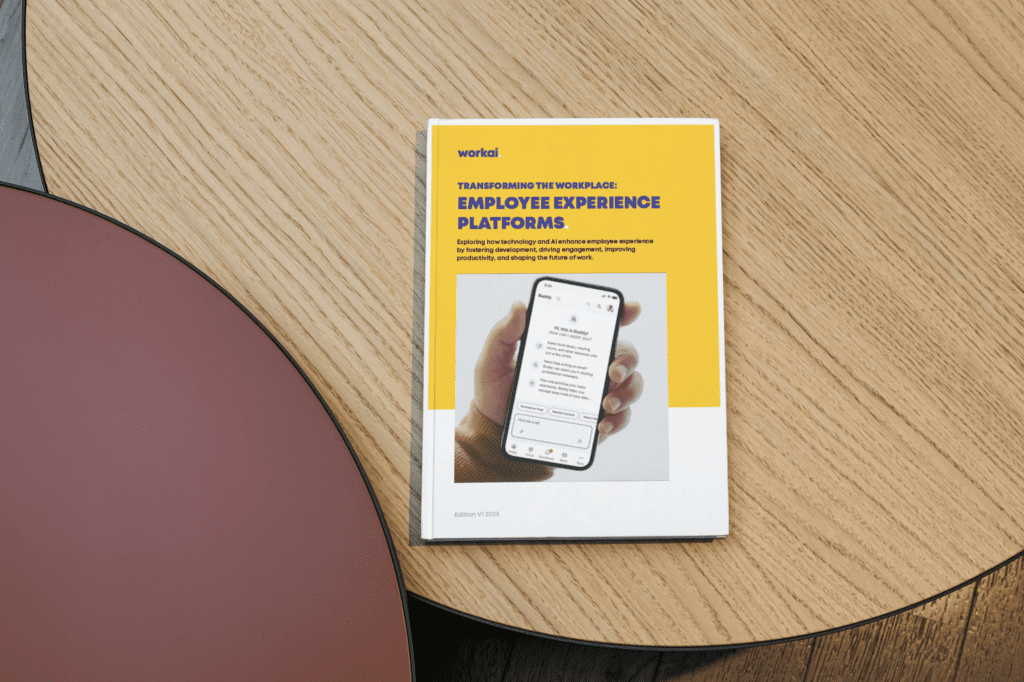
At the beginning of 2025, we released a new edition of our Digital Employee Experience (DEX) report, focused on how AI in the digital workplace would begin to influence everyday employee tasksas part of the broader evolution of the digital workplace. The report looked at AI not as a distant innovation, but as practical support for routine, repetitive activities, helping people in their day-to-day work. Looking back from the end of the year, one thing is clear: most of these predictions materialised faster than we expected.
At the time of writing the report, many of the scenarios we described still felt forward-looking. AI as a work assistant, supporting information organisation, content creation, and access to context, was for many organisations still seen as a near-future concept rather than an everyday reality. Today, it is already part of daily work across many teams.
The boundary between what is “digital” and what is simply “work” continues to fade. Solutions that were recently treated as experiments or pilot projects are now becoming standard practice. AI is no longer perceived as an add-on or a separate layer, but as a natural component of the digital workplace itself. This acceleration, the speed at which prediction turned into reality, was one of the most surprising takeaways of 2025 for us.
Curious about what else we anticipated beyond what is already visible today? Explore the full report on Employee Experience Platforms to see which signals point to the direction the workplace is now heading.
AI for Work: making everyday work easier
As the predictions from the report began to materialise faster than we had expected, one thing became increasingly clear: organisations do not need more AI. They need better use of AI as part of the evolution of the digital workplace and in employees’ everyday tasks.
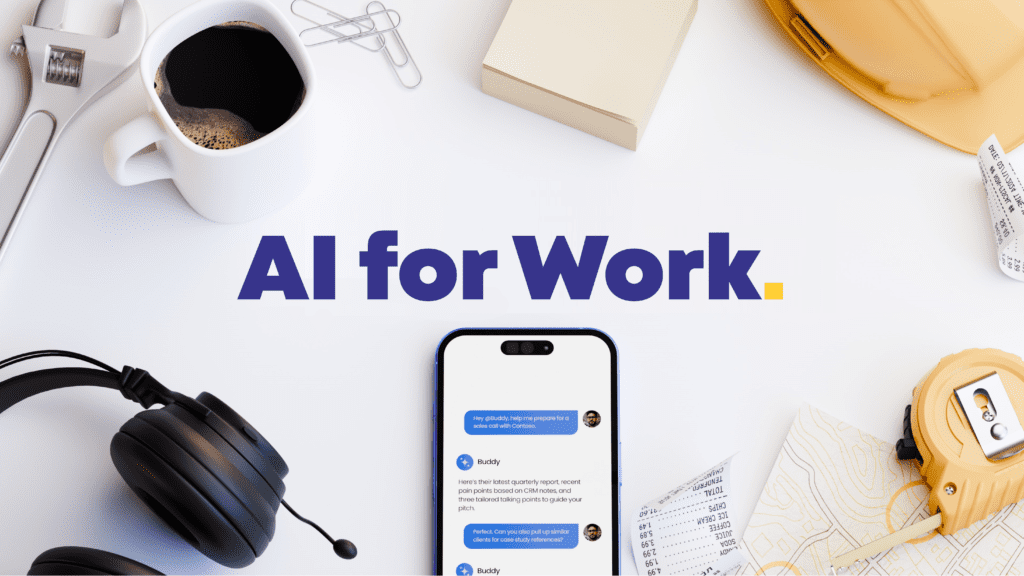
This insight led to the emergence of the AI for Work approach in 2025 – a practical response to real challenges faced by employees and teams within the broader evolution of the digital workplace. The goal was for AI to stop operating alongside work and instead become part of its natural rhythm.
Conversations with our customers showed that the greatest value comes from practical improvements: support in writing and editing content, faster access to information, better understanding of context, and organising knowledge scattered across multiple channels. These are the areas where AI in the digital workplace delivers real, measurable time savings.
AI for Work assumes that artificial intelligence acts as an employee’s assistant, not as a tool that imposes new processes. It does not require changing the way people work, learning complex interfaces, or switching between systems. Instead, it works where users already are: in the intranet, within content, in search, and in everyday communication.
The year 2025 confirmed that this approach drives adoption. AI embedded in a familiar work environment is simply used, not as an “innovation”, but as natural support for getting work done. This is the moment when AI stops being part of conversations about the future and becomes part of daily routines – a clear sign of how the evolution of the digital workplace is shifting from experimentation to everyday use.
For us, AI for Work became more than a product direction in 2025. It became a lens through which we evaluated every development decision. Because no matter how advanced technology may be, if it does not genuinely make people’s work easier, it fails to fulfil its role.
Webinar series: AI in Internal Comms
In 2025, we hosted a series of webinars dedicated to the use of AI in the digital workplace and internal communication, as part of the broader evolution of the digital workplace. Many of the questions raised during these sessions revolved around everyday challenges: information overload, low-quality messages, difficulty finding up-to-date information, and the lack of time needed to create clear, consistent content. AI was not seen as a magic solution, but rather as a tool that can help teams reduce operational workload and focus on more meaningful tasks.
Throughout the webinars, we shared practical guidance on using AI to support internal communication: from writing and editing messages, creating visuals and multimedia, to building AI agents, developing multilingual training content, and personalising communication. We also reviewed a range of tools, explaining their capabilities and showing how they perform in specific use cases.
A significant part of the discussions focused on responsibility. Questions about data security, the quality of AI-generated content, and the impact of AI on employees came up regularly. This was a clear signal that market maturity is increasing and that AI in the digital workplace, and the evolution of the digital workplace as a whole, is no longer treated as a passing trend.
Looking back at the end of 2025, we can say that the “AI in Internal Comms” webinar series was extremely valuable for us. It confirmed that when used thoughtfully, AI addresses real organisational needs, and that the market is increasingly looking for solutions that simplify everyday work, rather than simply showcasing advanced technology. We hope the webinars were also a practical source of knowledge and inspiration for you, offering concrete guidance on how to use AI in internal communication in a safe and effective way.
The webinars are available in Polish, with English subtitles provided for international audiences.
In 2026, we plan to continue the series and will be inviting you to the next sessions very soon.

From vision to functionality: Workai product updates in 2025
For us, 2025 was the year when many of the assumptions behind AI for Work began to take tangible shape within the product. We focused on steady, intentional development, responding step by step to real user needs. Every change we introduced shared one common goal: AI in the digital workplace that genuinely simplifies everyday work and supports the ongoing evolution of the digital workplace.
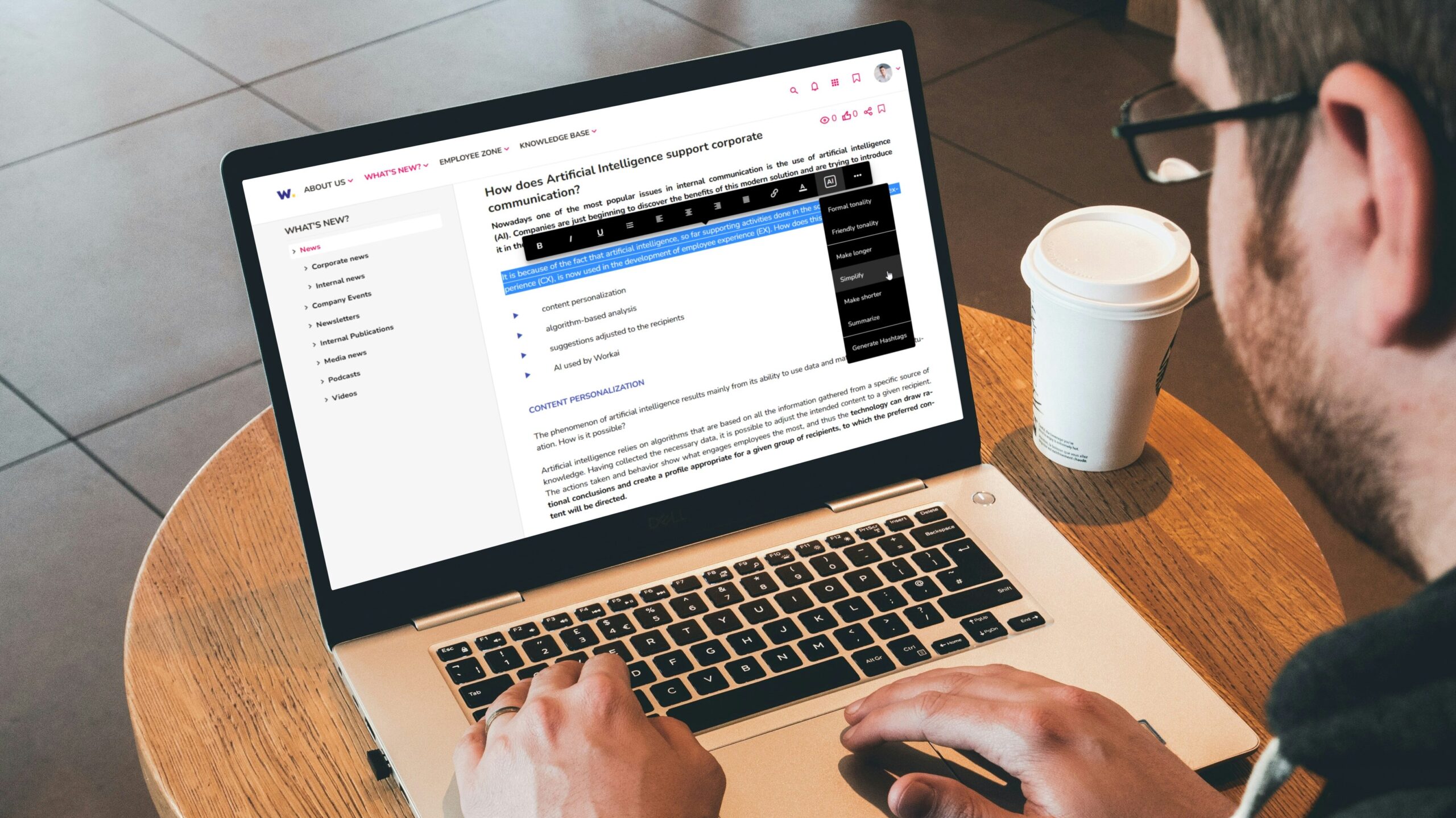
At the beginning of the year, our focus was on the content. AI-powered text editing features helped communication teams create, refine, and adapt messages faster and more effectively. This directly addressed a recurring challenge raised in conversations with customers: the lack of time to polish content and the need to repeatedly rework the same materials.
The next step was AI-supported comment moderation. As internal communication became more dialog-driven, the volume of interaction increased significantly. Automated moderation support helped teams maintain the quality of discussions without limiting employees’ freedom of expression.
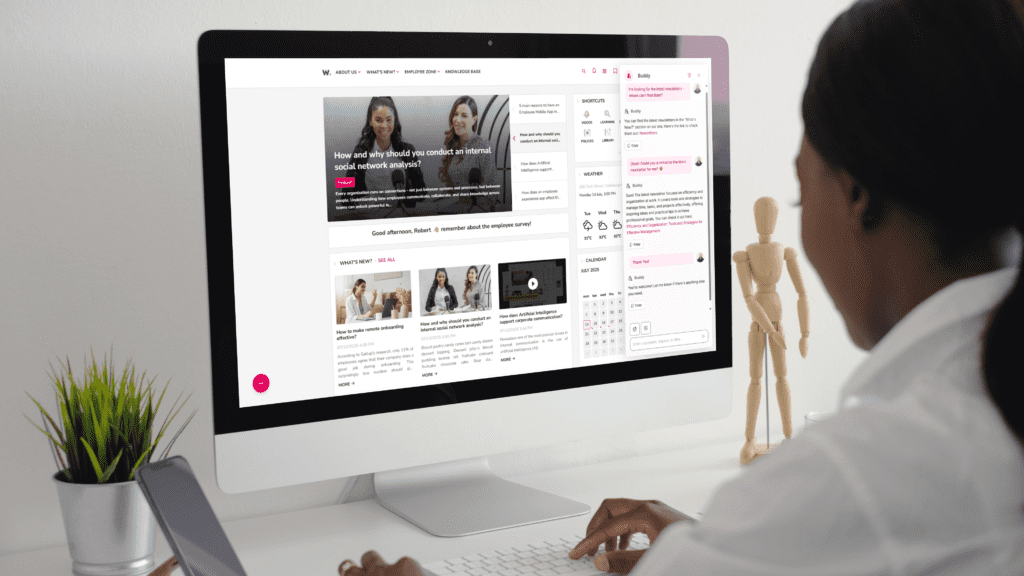
In the second half of the year, we introduced Workai Buddy, our AI-powered intranet assistant. This was the moment when the idea of AI for Work became truly practical. Instead of navigating through multiple sections and documents, employees could simply ask a question and receive an answer in the context of their work. For many organisations, this marked the point at which AI stopped being “a feature” and started to function as everyday support.
We also shifted our focus from simply finding content to truly understanding it. AI-powered term explanations made it easier to grasp terminology, acronyms, and internal context without leaving the digital workplace. This proved especially valuable in organisations where domain-specific knowledge and internal language can be a barrier for new or less frequently involved teams.
Looking at the year as a whole, product development in 2025 reflected a deliberate approach to the evolution of the digital workplace, driven by real user needs rather than trends. Every feature addressed a concrete user need. AI was not added because it was trending – it was embedded where it could meaningfully save time, bring structure to information, and help employees focus on what truly matters.
Bringing order to everyday work: Workai Spaces and Workai Assets
In 2025, it became increasingly clear that employee experience extends beyond communication and digital tools alone. It also includes the very tangible resources employees rely on every day, both digital and physical. How easily people can find the materials they need, plan their time in the office, reserve space, or access the workplace has a direct impact on comfort and the overall flow of daily work. This is the area we focused on in 2025, developing Workai Spaces and Workai Assets as complementary parts of a single workplace environment, and a practical response to the ongoing evolution of the digital workplace.
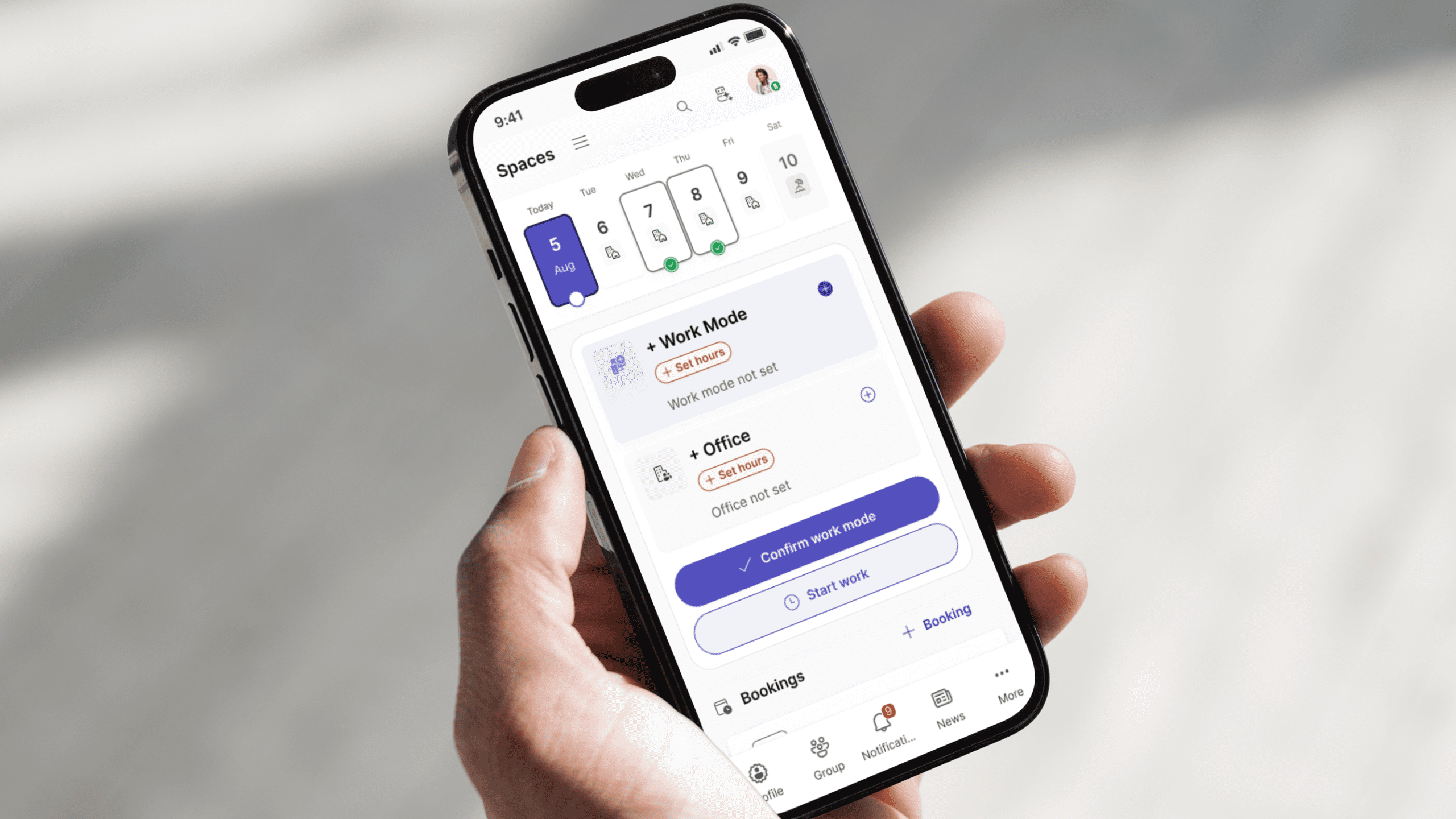
Workai Spaces is a module designed to manage hybrid work, office presence, and access to physical workspaces. It enables employees to plan office and remote workdays, reserve desks, meeting rooms, and other resources, and access office spaces in a way that is fully aligned with the digital workplace, without physical access cards, directly from a smartphone or smartwatch. As a result, employees no longer need to use multiple tools to plan their presence and workday; everything happens in one place.
Workai Assets addresses the need for better management of materials used across the organisation. Presentations, documents, visuals, and multimedia are easy to find, always up to date, and ready to be reused, without searching through multiple systems or outdated versions.
In 2025, Workai Spaces and Workai Assets represented another step in the evolution of the employee experience platform. They demonstrated that employee experience is not only about communication and content, but also about how easily people can plan their workday, access the office, and use the resources they need, without unnecessary friction or additional tools.
New partnerships: collaborating with HID
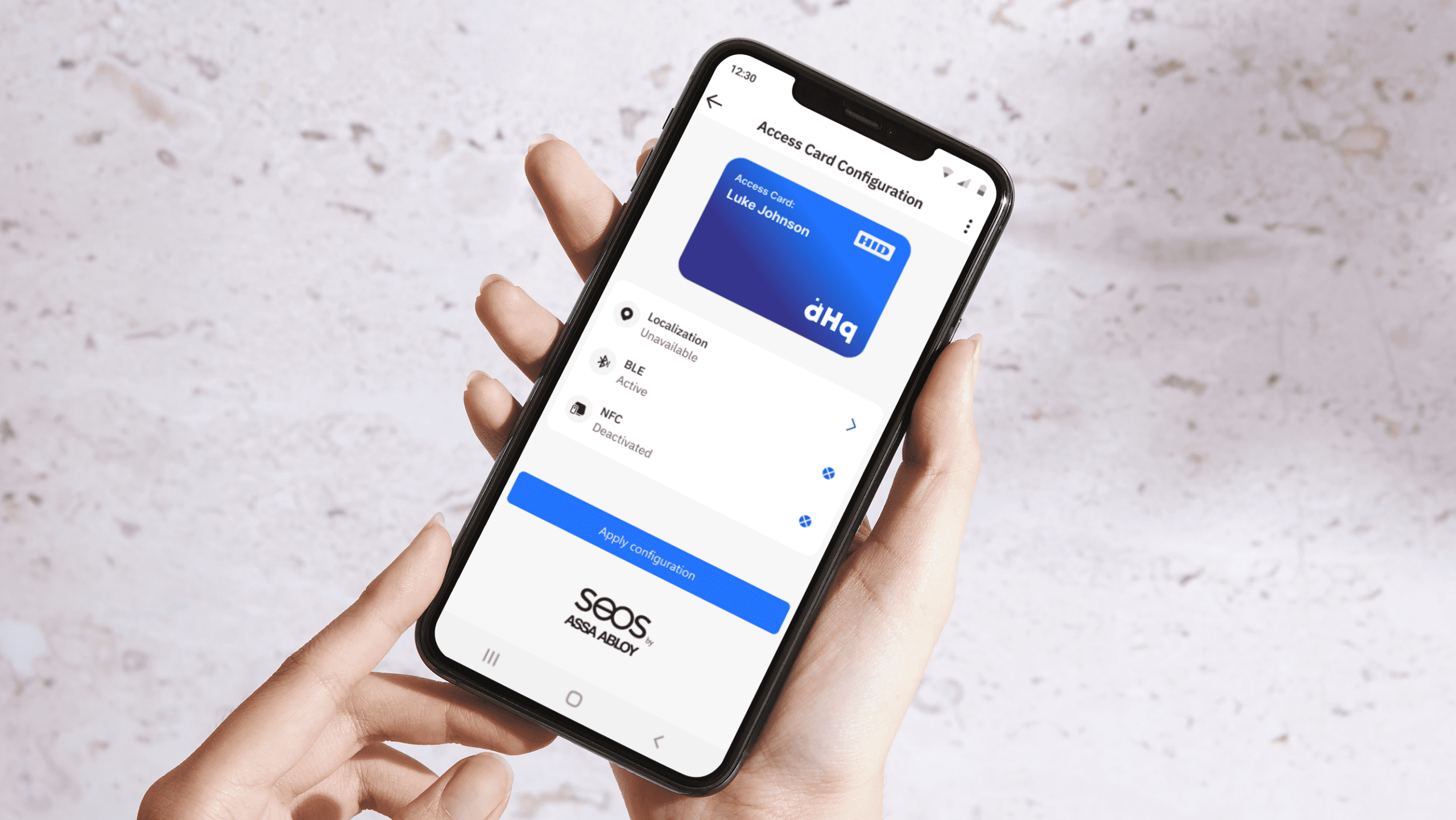
When we entered into a partnership with HID in 2025, it was clear to us that employee experience does not stop at a computer or smartphone screen. Our goal was to ensure that the digital workplace connects seamlessly with how employees move around the office and use its physical spaces. Office access was never meant to stand on its own, but to be part of the digital work experience.
In practice, this means mobile access without plastic cards or additional applications. The smartphone becomes the key, and access becomes part of the same ecosystem in which employees plan their presence, reserve spaces, and collaborate with their teams.
From Workai’s perspective, the key shift was connecting physical access with digital context. Office presence, reservations, and use of space stopped being separate actions and became part of one continuous flow of work. This made it possible to design employee experience not just at the application level, but across the entire workday.
The partnership with HID showed us that employee experience increasingly extends into areas that were previously owned by IT or administration. Access, security, and user comfort are starting to converge, and in 2025, this was a clear signal that employee experience platforms are maturing and covering more aspects of everyday work.
For Workai, this collaboration represents another step towards one cohesive environment – one that brings together communication, knowledge, collaboration, and physical presence into a single experience, rather than separating them into disconnected systems.
AI in the workplace – key predictions for 2026 and the evolution of the digital workplace
AI as infrastructure, not innovation
In 2026, we will talk less about “using AI”. It will simply be present in everyday work, helping people write, find information, understand context, and make decisions. The greatest value will come from AI that is largely invisible, works in the background, and aligns naturally with the user’s daily workflow. This shift reflects a broader evolution of the digital workplace, where AI becomes part of the underlying infrastructure rather than a standalone innovation.
Fewer tools, more order
Organisations are increasingly recognising that the challenge is not a lack of technology, but an excess of it. 2026 will be a year of consolidation: fewer systems and more integrated platforms that bring communication, knowledge, resources, and access together in one place.
Employee experience will go beyond digital
The boundary between the digital and physical worlds will continue to blur. Access to offices, spaces, and resources will become a natural part of the digital work experience, rather than a separate process managed “elsewhere”.
Responsibility and well-being as a standard
In 2026, questions around AI transparency, data security, and the impact of technology on employees will become standard. The maturity of solutions will be assessed not only by their features, but by how well they support people in their everyday work.
Personalisation as an expectation
Employees will expect tools that adapt to their role, context, and way of working. A single, one-size-fits-all experience will increasingly fall short.
2025 showed us that the evolution of the digital workplace is no longer something that happens “somewhere in the future.” It is happening here and now, often faster than we expected. What was still a concept not long ago is now increasingly becoming part of teams’ everyday work. AI has moved beyond experimentation and has become a practical support, helping organise information, save time, and simplify daily tasks. At the same time, the need for coherence is becoming more pronounced: fewer tools, more thoughtfully designed solutions that bring communication, knowledge, resources, and access together in one environment.
From Workai’s perspective, 2025 confirmed the direction we had chosen earlier and showed that employee experience is maturing – now extending beyond the purely digital to encompass the entire workday, including moments away from the screen. Responsibility, transparency, and the real impact of technology on employee well-being are also becoming increasingly important.
We expect this trend to continue in 2026. AI will become less visible and more useful. Employee experience platforms will simplify, integrate, and personalise, while work itself will more seamlessly connect the digital and physical worlds. This is the direction in which the evolution of the digital workplace is heading, with AI becoming quiet but meaningful support for employees’ everyday work.
If you’d like to talk about what the digital workplace looks like in your organisation, we’d love to invite you for a virtual coffee – just an open conversation about work, technology, and where it’s all heading.