


Intranet platform management in 2026: the real cost of maintaining an EX Platform
Intranet platform management has become one of the most critical dimensions of digital workplace strategy in 2026. In the Platform Management scenario of the ClearBox Intranet and Employee Experience Platforms 2026 report, the highest scores go to systems offering extensive configuration capabilities. At first glance, the conclusion seems obvious: the more administrative options a platform provides, the more mature it must be.
In practice, however, “more” often means “more expensive,” “slower,” and “more complex”, directly impacting the long-term cost of intranet maintenance.
In 2026, the challenge is no longer the lack of features in the admin panel. The real challenge is whether an organization can maintain the platform without building a dedicated micro-team of specialists around it.
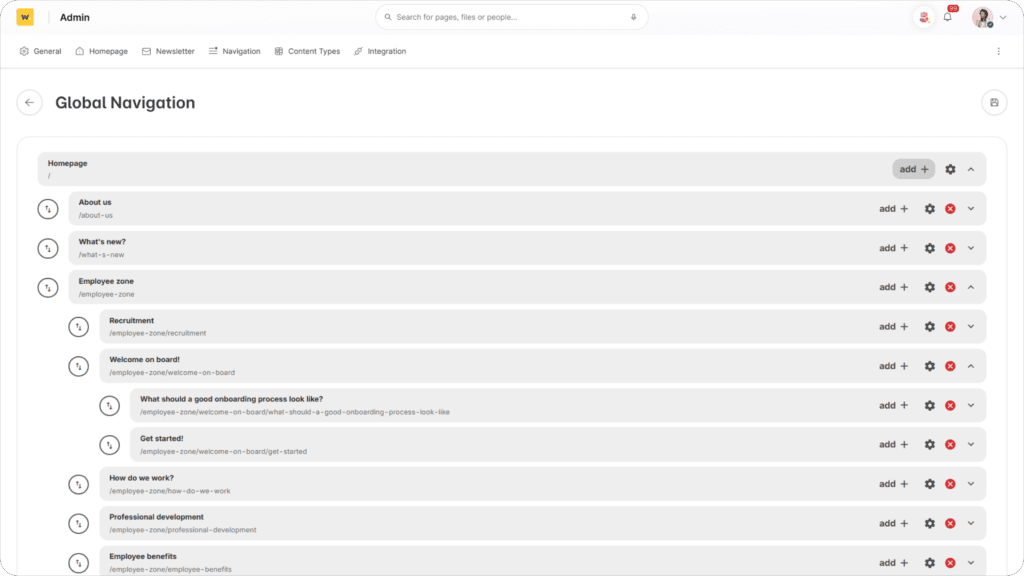
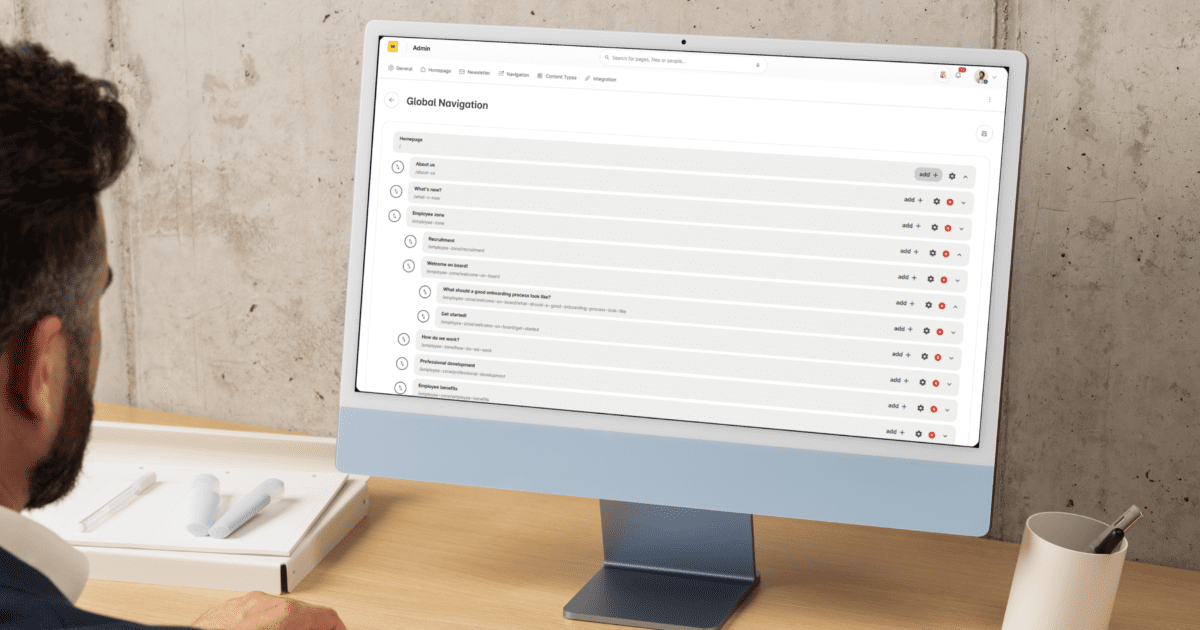
ClearBox analysts highlight that the top-level navigation in Workai is straightforward to manage through a drag-and-drop interface.
Advanced configuration vs. sustainable intranet platform management
Platforms such as Interact, Omnia, and Unily receive high scores in the administration category. They offer impressive levels of configurability. ClearBox, however, does not overlook the cost of that flexibility.
In the case of Interact, analysts point to a “significant learning curve” resulting from the large number of settings and dependencies. Omnia provides powerful administrative tools, but they are described as “necessarily complex,” often requiring external partner support for more advanced changes. Unily offers advanced analytics and adoption benchmarking, yet precise layout and structural customization demands considerable time and effort from the management team.
All of these systems enable deep personalization. At the same time, they introduce a real cost: the need to maintain high-level administrative expertise on an ongoing basis. In large organizations, this often means that the intranet ceases to be a communication project and becomes an infrastructure project requiring continuous operational support.
This is not a flaw. It is an architectural choice. The question is whether every organization truly needs that level of control.
ClearBox experts note that it’s easy to build attractive landing pages in Workai, using a grid system and a rich collection of widgets that are dragged and dropped into place, just like the Block Editor.
Microsoft 365 and the ongoing cost of intranet maintenance
A different case is the standard Microsoft ecosystem. The issue here is not a lack of capabilities, but fragmentation.
An administrator managing a “pure” SharePoint intranet must separately configure SharePoint, Viva Engage, Microsoft Search, Entra ID, and other components. Each area has its own admin center, update cycle, and configuration logic.
ClearBox indicates that keeping up with Microsoft’s updates across multiple areas can become a full-time responsibility in large organizations. In practice, this increases maintenance costs and introduces the risk of configuration inconsistencies across modules.
This fragmentation is one of the main reasons organizations begin searching for an Experience Layer that brings coherence to both the user experience and administrative management across the Microsoft ecosystem.
Architecture and the cost of intranet maintenance
Workai represents a different perspective on system maturity. Instead of maximizing configuration options, it focuses on reducing maintenance costs and accelerating time-to-value.
First, the platform offers a wizard-based configuration process. Basic setup and deployment can be completed in hours or days, rather than weeks of architectural workshops. For IT teams, this means lower resource involvement during the initial phase.
ClearBox emphasizes that Workai is a versatile and highly modular product that delivers strong functionality across many use cases.
Second, modularity allows organizations to implement only the components they actually need. There is no requirement to maintain unused features or manage their configuration. This directly reduces low IT overhead.
Third, ClearBox highlights the consistency of the end-user interface. From an administrative perspective, this matters significantly: configuration patterns learned once can be reused across modules. This reduces the risk of creating isolated “configuration islands” that eventually lead to inconsistent user experiences.
The report also notes that building sub-brands within Workai requires separate system instances. For very large holdings, this may be a limitation. For most organizations, however, it enforces structural clarity and prevents unnecessary environmental complexity.
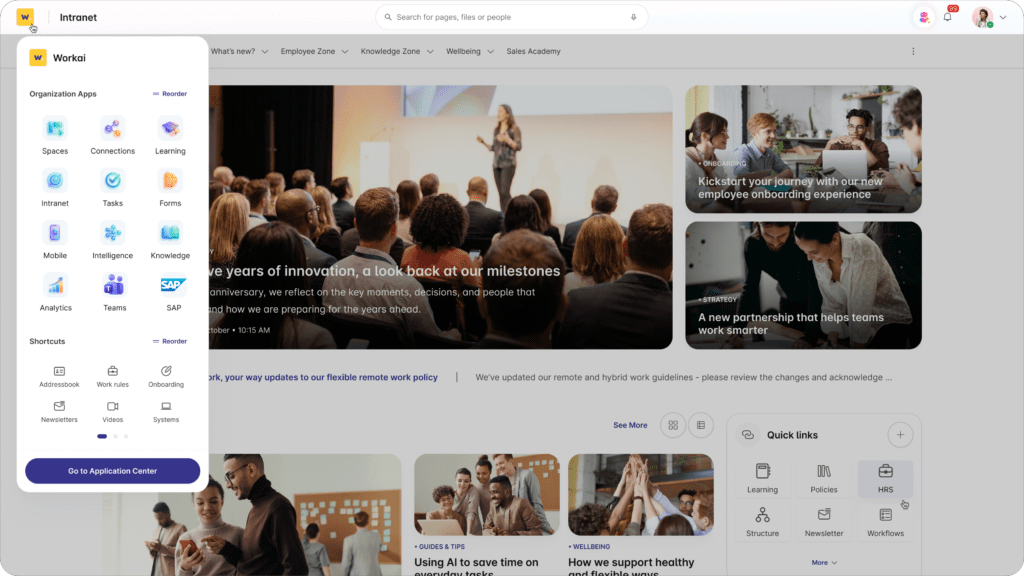
ClearBox emphasizes that Workai delivers a strong employee experience through a modular approach that allows businesses to choose the functionality that’s right for them.
The ClearBox Platform Management scenario measures not only what a system enables, but at what organizational cost.
A high score reflects broad capabilities. It does not indicate how long it will take to master them, how many people will be required to maintain the platform, or how quickly the organization can respond to business changes.
In practice, the decision often comes down to a choice between:
- a model of maximum configurability, offering near-unlimited flexibility but requiring continuous investment in administrative expertise,
- and a model of controlled simplicity, which limits certain advanced scenarios but significantly reduces operational costs and technical debt risk.
Workai aligns with the second model. For IT teams, this means lower maintenance pressure and greater predictability. For Communications and HR departments, it means increased autonomy without constant reliance on technical specialists.
In 2026, EX platform maturity is no longer defined solely by the number of sliders in the admin panel. Increasingly, it is measured by whether the system can be sustainably maintained — without building a separate organization around it.