


ClearBox Report 2026: Digital Workplace Integrations
Just a few years ago, digital workplace integrations were treated as a secondary element. It was enough for a system to “connect” to HR, calendars, or document repositories. The mere existence of a connection was considered proof of maturity. However, the ClearBox Intranet and Employee Experience Platforms 2026 report clearly shows that this way of thinking no longer works.
In 2026, integrations have become, as ClearBox analysts describe them, a “critical flashpoint” of Digital Workplace projects. Not because organizations need more integrations, but because poorly designed ones increase system complexity instead of reducing it. Today, the key question is no longer how many systems can be connected, but whether an employee can complete a task within a single context, without constantly switching between applications.
Two approaches to integration
The ClearBox identifies two dominant integration models present in the EX platform market. Although both are technically valid, their implications for organizations differ dramatically.
“Display-only” integrations, the dominant market approach
Most platforms today offer ready-made widgets and predefined connectors that allow external system data to be displayed or redirect users to the source application via SSO. From a product demo perspective, this looks attractive: the integration is visible, and the list of supported systems appears impressive.
However, ClearBox notes that in practice, such integrations rarely enable task completion. Employees can see information, but to finish the process, they must leave the intranet, switch context, and operate within another system’s logic. As a result, the integration becomes merely an aesthetic “data preview,” rather than a genuine productivity improvement.
API-native and custom development, the Workai philosophy
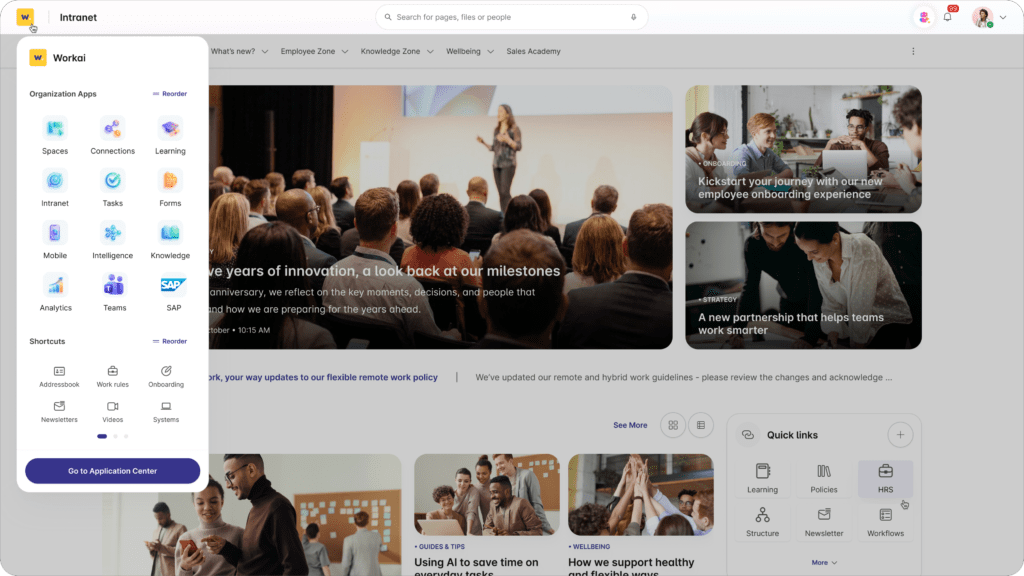
An alternative to the “display-only” approach is a model based on open APIs and a dedicated integration framework, represented by Workai. Instead of offering dozens of generic widgets, the platform enables integrations to be built around specific business processes.
ClearBox analysts confirm that Workai’s approach to integration with business systems is to focus on custom development, using the product’s APIs to build bespoke integrations upon client request.
Comparison with market leaders: different integration philosophies, different outcomes
It is worth noting that in the Digital Workplace Integrations & Services scenario, Workai’s score is marked with a “+” symbol. ClearBox uses this designation to highlight the product’s growth potential when supported by additional services or custom development. In practice, this means that a lower numerical score does not indicate technological gaps, but rather a deliberate product decision: instead of offering a generic “one-size-fits-all” widget marketplace, Workai focuses on a developer framework and open APIs that require greater implementation maturity but provide significantly higher flexibility.
Workai vs. MangoApps
MangoApps is described in the report as one of the most comprehensive solutions on the market — a true “one-stop shop” covering LMS, tasks, communication, and an extensive library of ready-made integrations. However, ClearBox notes that such high “functional weight” may lead to a side effect described as a “noisy user experience.”
In practice, a large number of native features, settings, and use cases can make the interface more difficult to navigate, requiring users to spend more time understanding where and how to perform specific actions.
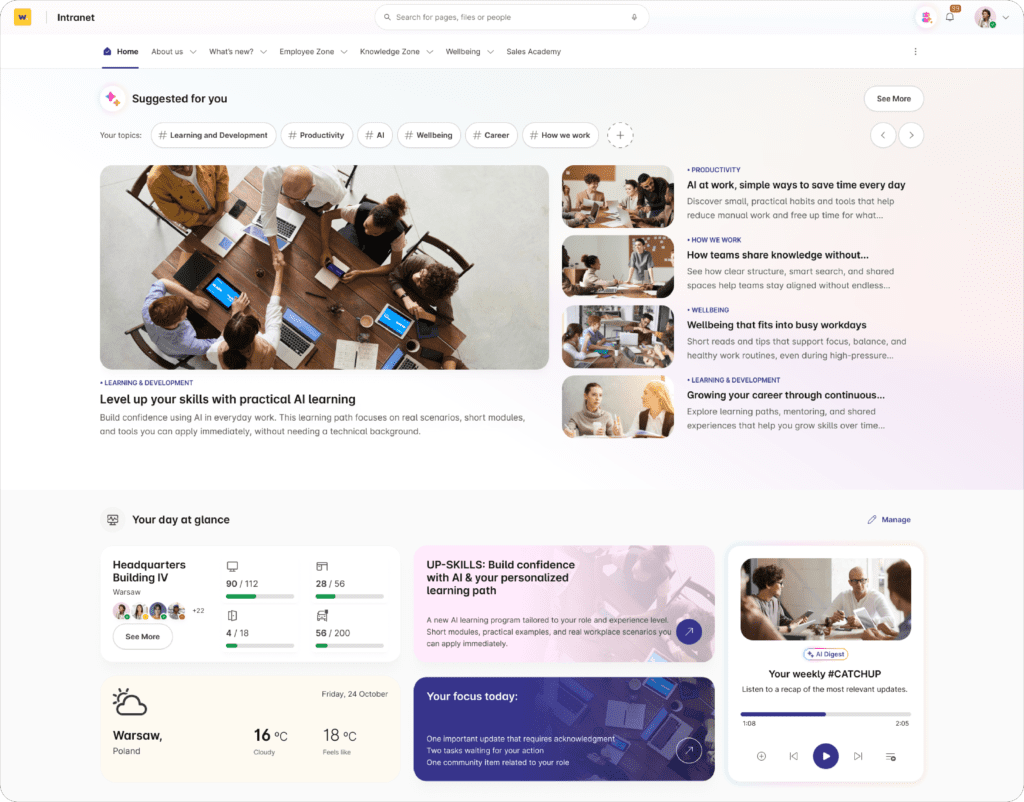
Workai represents the opposite approach. The platform is designed to be highly modular, yet consistent in UX. Whether an organization uses the intranet, tasks, forms, or external integrations, employees navigate the same predictable interface. As integrations expand, the user experience remains clear and intuitive.
According to ClearBox experts: “Overall, the user experience is excellent. AI capabilities are applied thoughtfully, enhancing the platform’s overall impact.”
Workai vs. Omnia
Omnia stands out with its rich offering of ready-made connectors to popular systems such as Workday and ServiceNow. However, the ClearBox report specifies that within the standard scope, these are primarily one-way scenarios – notifications and alerts informing users about events, but not enabling task completion within the platform itself.
Workai designs integrations differently. Rather than focusing on the number of available connectors, the platform builds integrations around specific business processes. With its API-first approach, users not only see information but can make decisions and take action without switching context. In this sense, Workai delivers a “system of action,” not merely a notification system.
An additional advantage is that, as a fully standalone platform, Workai does not interfere with SharePoint’s structure or templates – something ClearBox associates with high resilience to changes within Microsoft 365.
Workai vs. Microsoft 365
The base Microsoft 365 ecosystem offers thousands of connectors and integration possibilities. However, ClearBox explicitly points to the problem of experience fragmentation. Communication, tasks, and communities are distributed across SharePoint, Teams, and multiple Viva applications, forcing users to constantly switch between tools.
The report describes this phenomenon as “toggle tax” — the cognitive and operational cost resulting from context switching.
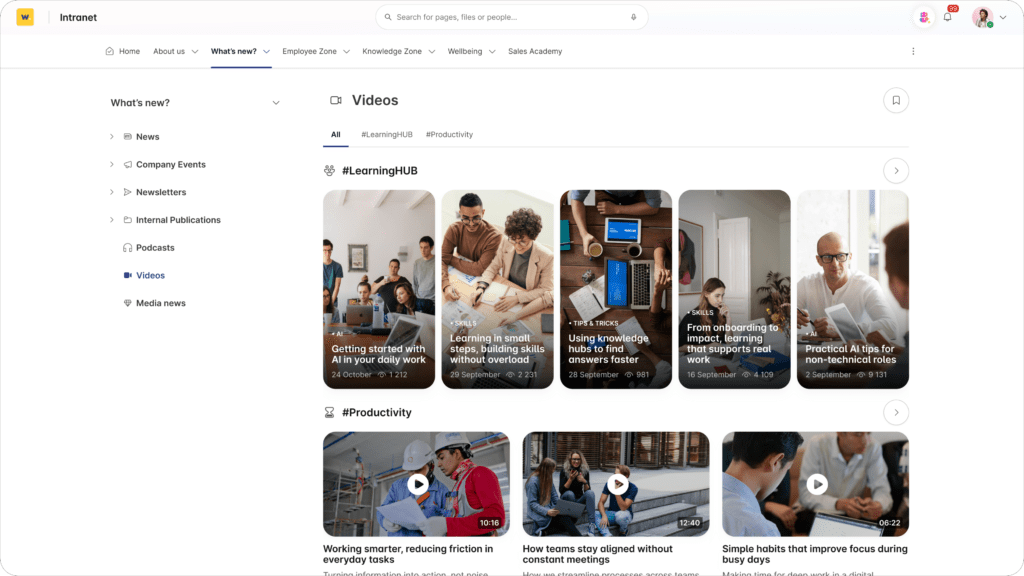
Workai reduces this problem by acting as an Experience Layer and a consistent “front door” to the Microsoft ecosystem. Particularly important is the ability to send notifications directly to the Teams Activity feed, ensuring employees receive information where they already work, rather than searching for it across scattered Viva applications. Additionally, the entire intranet can function as a native app within Teams, creating a single, predictable reference point.
“The platform supports day-to-day communication – including targeted messaging, campaigns, and notifications across browser, Teams, email, and mobile – in a structured and coordinated way.”
AI-to-AI integration and frontline enablement
ClearBox also highlights the forward-looking nature of Workai’s integration approach. The platform stands out with its AI-to-AI integration concept – the Workai Intelligence module has been designed according to industry standards, enabling its resources to be discoverable by external assistants such as Microsoft Copilot, Gemini, or Claude. In practice, this makes Workai a more future-ready “intelligent front door” compared to platforms built on static, hard-coded widgets.
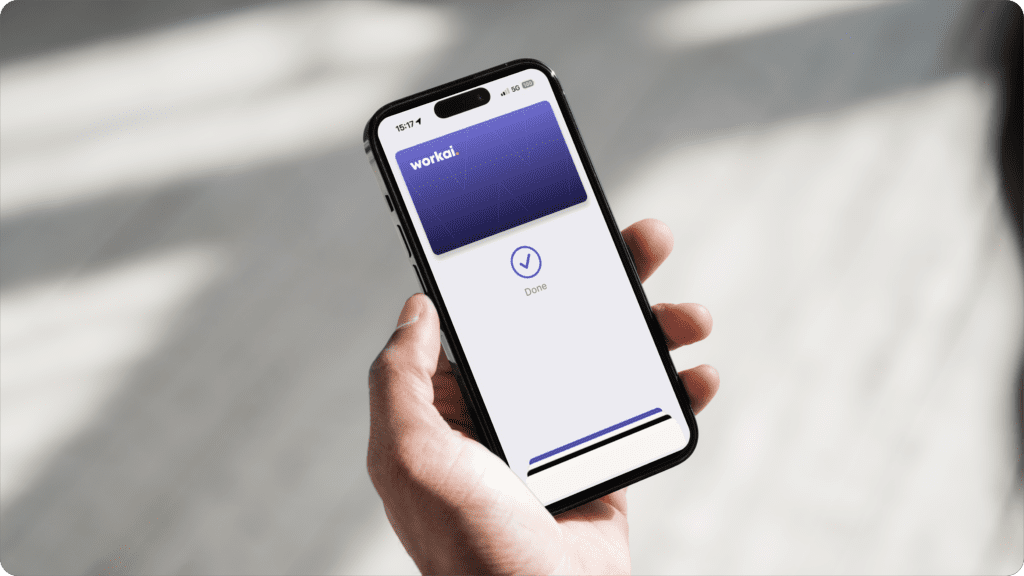
At the same time, Workai bridges the digital and physical worlds – an aspect particularly relevant for operational leaders. The Spaces module enables integrations beyond software. One unique feature highlighted by ClearBox is Badge Pass, which allows employees to use their smartphone as a physical building access card.
Combined with Mobile Shortcuts — large, one-click buttons for the most common tasks — the intranet stops being merely an information portal and becomes a practical system of action for frontline employees who do not have time for complex navigation.
The difference is fundamental. Integration does not end at displaying information; it guides the user through the entire scenario: from data to decision, to action, without leaving the platform. In this model, the intranet ceases to be a presentation layer and becomes a system of action that genuinely automates work.
“We especially like that employees can use their phone with the Workai app as an access badge to enter the building, which is a creative feature.” – ClearBox 2026 Report
The ClearBox 2026 report shows that integrations in the Digital Workplace are no longer a purely technical matter – they have become an architectural decision. In a world where organizations use dozens of tools simultaneously, every additional “visible integration” can either simplify work or become another source of chaos.
In this context, the difference between display-only integrations and API-based, automation-driven approaches is fundamental. The former display data. The latter enable action. ClearBox clearly indicates that the ability to complete a task within a single context, without switching systems, is becoming the new maturity benchmark for the Digital Workplace.
In 2026, integrations are no longer a list of connections or a collection of widgets. They are an experience layer that organizes complexity, reduces toggle tax, and increasingly leverages AI to understand user intent. In this model, the intranet stops being an information portal and becomes an intelligent system of action – the place where work actually begins.